As we continue on with the Sermon on the Mount in Mathew 6, this particular passage comes back powerfully throughout Jesus’ ministry.
Read Matthew 6:25-34
We seem to be focussed on two 2 verses:
“Therefore I tell you, do not worry about your life, what you will eat or drink; or about your body, what you will wear. Is not life more than food, and the body more than clothes?”
(Matthew 6:25 NIV)
And then…
“But seek first his kingdom and his righteousness, and all these things will be given to you as well.”
(Matthew 6:33 NIV)
What is the main message that you hear Jesus preaching?
Don’t worry, God will provide!
(Caveat… IF we do what He wants us to do…)
Does this sound right? Does it also feel to you like there is something missing? Something more to be had?
Let’s think about provision going forward, Just in the next few years. How did God provide while Jesus was walking around on earth?
Can you think of a few examples?
Jesus provided fish for Peter… twice (Luke 5 and John 21)
Temple Tax: Catch a fish, the money is inside its mouth (I don’t know who was more surprised… Peter or the Fish…)
(Matthew 17)
Food for 5,000… then again for 4,000
(Matthew 14 and Matthew 15)
But then again:
The women traveling with Jesus provided for the ministry from their own means… God provided through the women.
(Luke 8)
The disciples were scolded and Jesus rebuked because they were “harvesting” corn kernels on a sabbath … because they were… hungry. God did not take away the hunger or provide a banquet… just corn kernels.
(Matthew 12)
(Ok… to be fair, the disciples were just young men, and they are always hungry)
Will God take care of you? Yes.
Will it look like you want it to look like? Possibly not. Actually, probably not. God provides what we need, not necessarily what we want.
But I am wondering if there isn’t a signal to look at Jesus’ words again, hidden in verse 32?
“For the pagans run after all these things, and your heavenly Father knows that you need them.”
(Matthew 6:32 NIV)
Why would Jesus condemn the “Pagans” the foreigners, the non-Jews for wanting food and clothes to wear? It doesn’t track.
Unless Jesus is not just referring to food and clothes, but food and clothes and possessions in abundance, and beyond our needs…
I think Jesus is also giving a warning about greed.
Remember that not 20 minutes earlier in His sermon did Jesus tell them to look after the needy, and to do it humbly. (Matthew 6:1-4). Look after those who need stuff.
Jesus is not saying that if we seek the Kingdom first, THEN He will look after us as a _quid pro quo_… no, He is saying to get your head in the game and live a life bearing fruit, and moving yourself away from gathering and wanting to gather, earthly stuff.
Yes, He is addressing worry, and Yes, he is addressing needs, but more so He is highlighting what is important for Godliness vs what the world wants us to chase after.
Which makes me wonder then…
If Jesus warns us over and over about wanting, and gathering stuff (“Do not store up for yourselves treasures on Earth…” Matthew 6:19) is the modern teachings on prosperity right? Are we understanding what God means? Or are we choosing to interpret it in a way that is comfortable?
Something to think about…
So to end off, I just want you to consider that there are two ways to read verse 31 (and this is not exegesis or greek language and doctrine study… It is just a thought exercise):
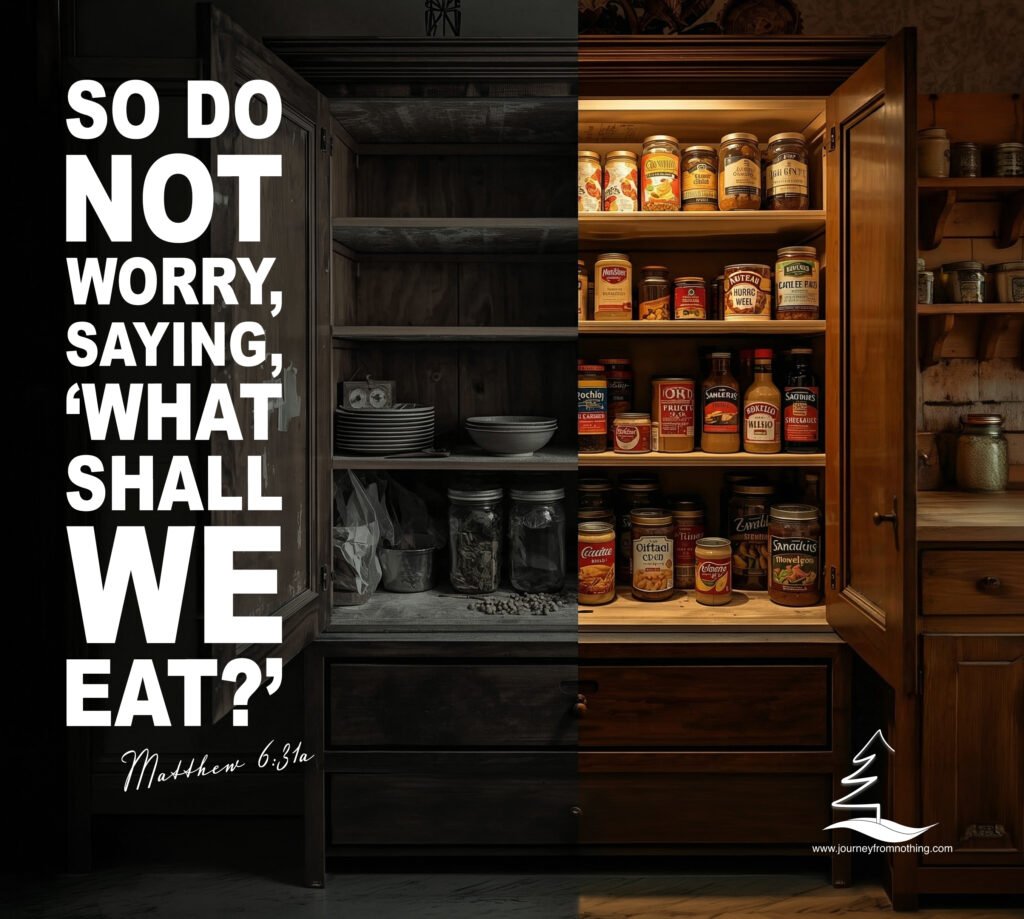
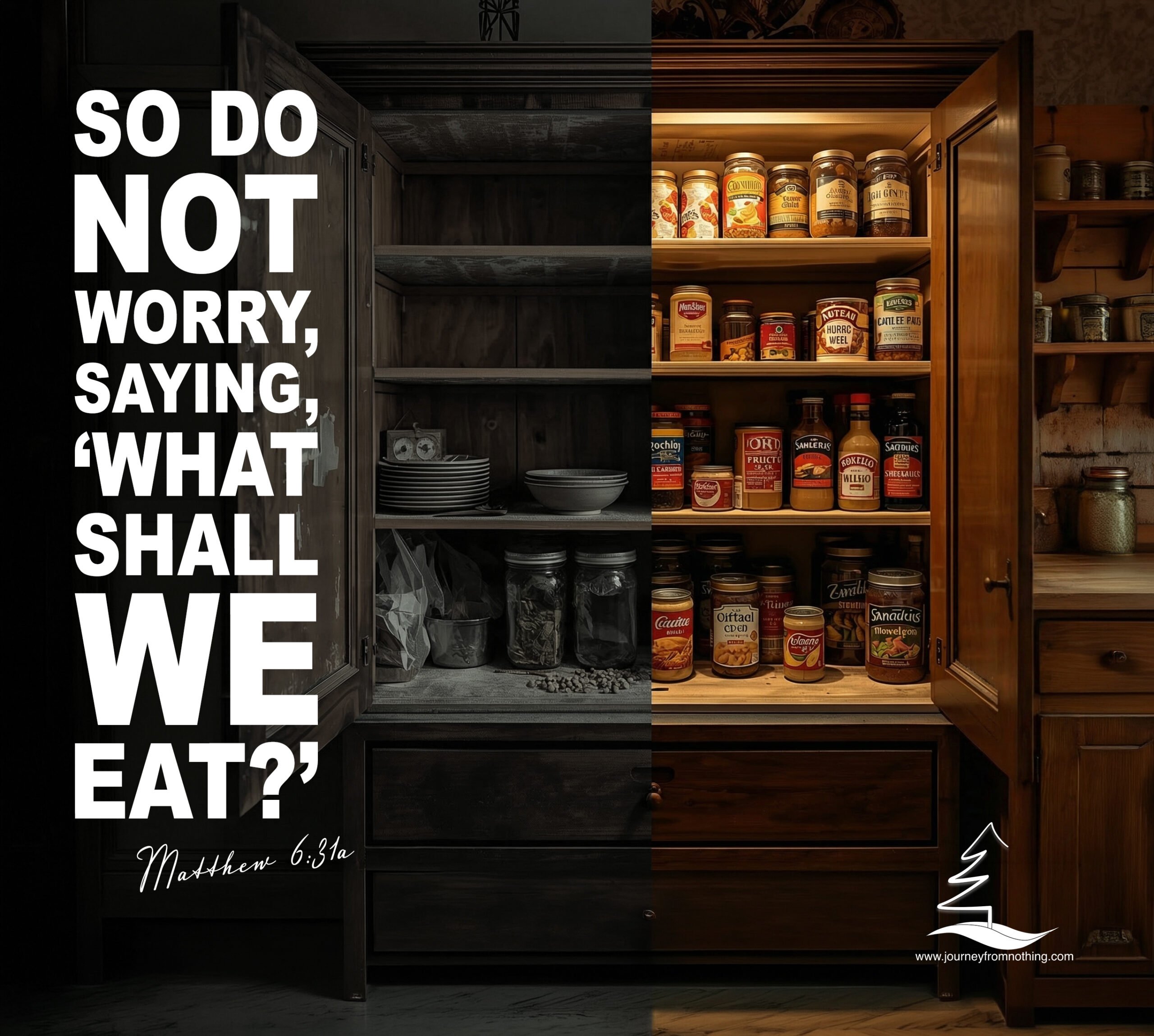
“So do not worry, saying, ‘What shall we eat?’”
Are you standing in front of a full cupboard wondering what should you make for yourself today, or in front of an empty cupboard wondering _if_ you will eat today?
or ‘What shall we drink?’
Are you spoilt for choice in your home between cool drinks & wines; or sparkling, still or flavoured waters? Or are you walking 5km to the nearest fresh water well with a wheelbarrow and some plastic containers?
or ‘What shall we wear?’”
Are you wondering if your shoes will make it to the end of the week? Or are you wondering which shirt matches which pants and if it is a boots day or a sneakers day?
(Matthew 6:31 NIV)
If you asked me what I think… I think… Jesus was using the exact same words to speak two different messages to two different groups of people.
In the end it is all about the attitude of the heart.
If you are lacking, where is your trust and Faith?
And if God blessed you with abundance. Where is your focus, what are you doing with that blessing?